

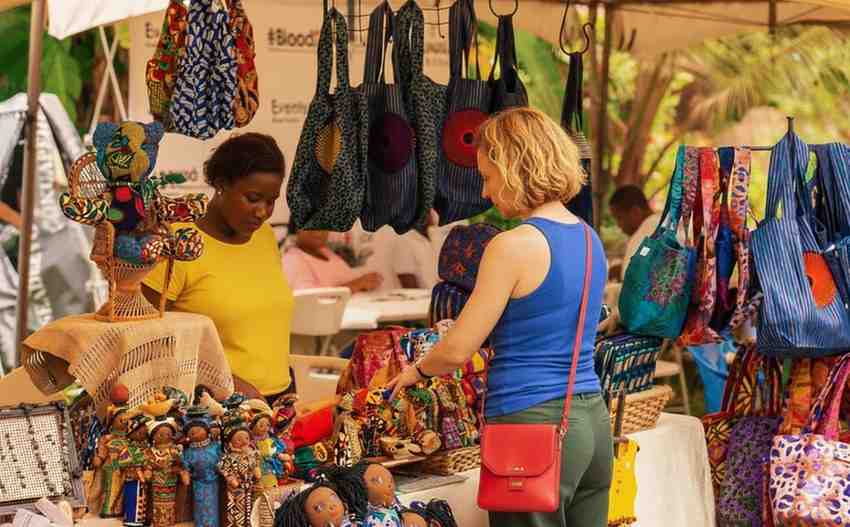
Kantamanto Market is one of the most significant commercial hubs in West Africa. Located near Accra’s central business district, it is widely recognized as the largest second-hand clothing market in the region.
An estimated 15 million garments move through Kantamanto every week. This volume places it among the most important resale markets in the global second-hand clothing trade. For visitors touring Ghana, Kantamanto offers more than shopping. It offers insight into international trade, local entrepreneurship, fashion innovation, and economic resilience.
Understanding how the market operates transforms a simple visit into a meaningful cultural experience.
The Global Journey of a Garment
Most clothing sold at Kantamanto originates from Europe, North America, and parts of Asia. These garments are collected, sorted abroad, compressed into large bales, and shipped to Ghana.
Once in Accra, traders purchase sealed bales without knowing exactly what is inside. A bale can cost a trader a significant portion of their capital. There is no guarantee of quality.
Some bales contain high-value branded items that sell quickly. Others may include damaged clothing that cannot be resold. The trader absorbs the risk.
This system makes Kantamanto not just a marketplace but a daily gamble for thousands of small business owners.
The Economic Ecosystem Behind the Market
Kantamanto supports a large informal economy. Beyond the traders selling clothing, the ecosystem includes:
- Bale importers and distributors
- Head porters who transport goods
- Tailors who repair damaged items
- Upcyclers who redesign garments
- Street vendors selling accessories
- Food vendors feeding traders and visitors
For many families, Kantamanto is their primary source of income. The market functions as a financial engine within Accra’s urban economy.
For visitors, understanding this structure adds context to what might otherwise seem like a chaotic environment.
Affordability and Access to Fashion
One of the most practical reasons to visit Kantamanto is affordability.
Travelers can find:
- Branded sportswear
- Vintage denim
- Leather jackets
- Unique streetwear
- Children’s clothing
- Footwear and accessories
Prices are significantly lower than international retail rates. Bargaining is part of the culture, but it should always be respectful. Traders rely on these sales to sustain their businesses.
For tourists, this provides an opportunity to purchase distinctive pieces while directly supporting local entrepreneurs.
Why Early Morning Is the Best Time to Visit
Timing is critical at Kantamanto.
Many traders open new bales at dawn. This is when the highest quality items are discovered. Experienced buyers, stylists, and resellers often arrive before sunrise to position themselves for the best finds.
By mid afternoon, the most desirable pieces are usually gone.
Visiting early offers several advantages:
- Better selection
- Cooler temperatures
- A more organized atmosphere
- The opportunity to witness bale openings
Watching a bale being opened is one of the most interesting moments in the market. Traders gather, sort quickly, and assess value within minutes. It is a fast paced, high stakes process.
For serious shoppers or curious visitors, early arrival makes a noticeable difference.
Kantamanto’s Influence on Accra’s Fashion Scene
Kantamanto has shaped modern Accra street style.
Young designers and stylists regularly source materials from the market. Many Ghanaian fashion brands use upcycled clothing from Kantamanto to create original collections.
This has produced a distinctive aesthetic that blends global influences with local creativity.
The market has also attracted international researchers, journalists, and sustainable fashion advocates interested in circular economies and textile reuse.
Sustainability and Environmental Impact
Kantamanto exists within a larger global conversation about fast fashion.
While the market extends the life cycle of millions of garments, not all imported clothing can be resold. Waste management remains a challenge, and environmental pressures are real.
At the same time, the market plays a role in reducing textile waste by giving garments a second life.
For visitors interested in sustainability, Kantamanto offers a practical example of circular fashion in action.
What Visitors Should Expect
Kantamanto is busy, loud, and energetic. Narrow walkways are filled with traders and buyers negotiating prices. It can feel overwhelming at first.
To navigate successfully:
- Arrive early
- Dress comfortably
- Carry small denominations of cash
- Stay aware of your belongings
- Consider going with a local guide
A guide can help explain sections of the market, assist with bargaining, and provide historical context.
Adding Kantamanto to Your Ghana Itinerary
Kantamanto pairs well with:
- A Jamestown walking tour
- A visit to Makola Market
- An Accra city history tour
- A local chop bar food experience
For cultural tourists, fashion enthusiasts, photographers, and researchers, the market provides strong visual and narrative depth.
It offers a perspective of Accra that goes beyond beaches and heritage castles. It shows daily enterprise, risk taking, and creativity at scale.
Final Thoughts
Kantamanto Market is more than a second-hand clothing hub. It is a reflection of global trade, local resilience, and Ghana’s adaptive economy.
For travelers seeking authentic urban experiences, it is one of Accra’s most compelling destinations.
If you want to understand how global systems intersect with local innovation, wake up early, walk through Kantamanto at dawn, and observe the rhythm of a market that moves millions of garments and supports thousands of livelihoods every week.
It is not just shopping. It is a lesson in commerce, culture, and creativity.