
When most people think about investing in Ghana, two things usually come to mind first, land and gold. Both can be profitable, but both also carry risks that diaspora investors are often not fully prepared for, unclear land titles, boundary disputes, fluctuating gold prices, and heavy regulation in the mining sector.
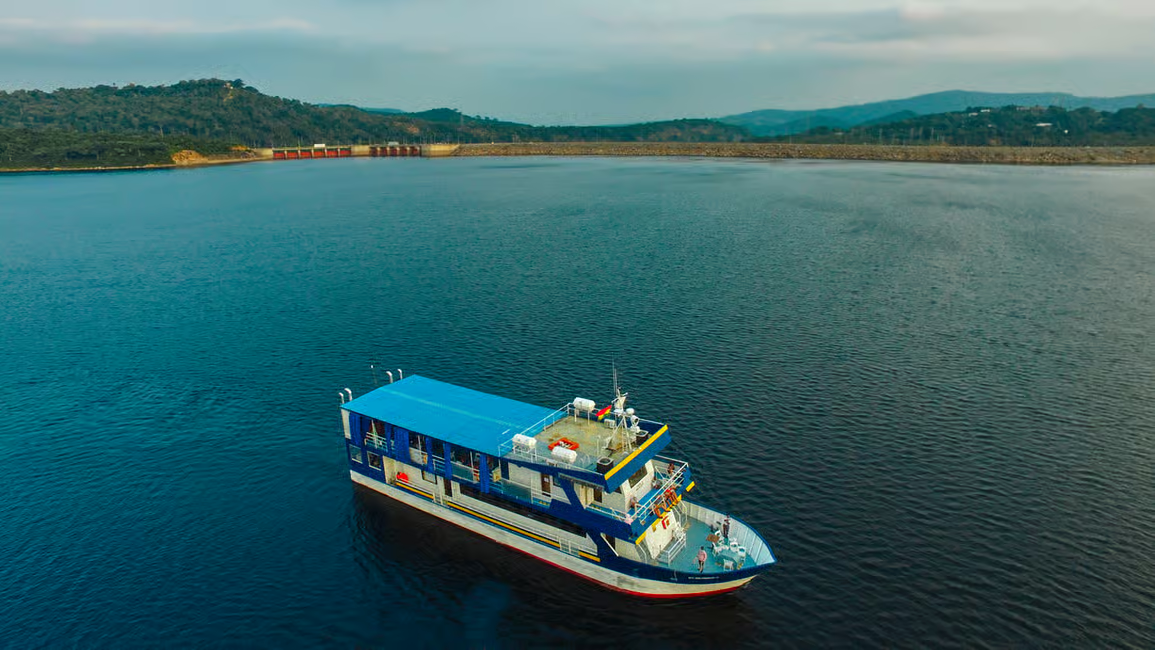
There is a third option that rarely comes up in these conversations, and it may actually offer more certainty than either of the more popular choices. The Volta Lake is one of the largest man-made lakes in the world, and for investors, it works less like a scenic landmark and more like an insurance policy for capital. It offers year-round water access, government-regulated agricultural zones, a functioning transport route, and a role in the national energy grid, all in one region.
For the diaspora specifically, the biggest fear when investing in Ghana is unpredictability, unreliable rainfall, rising transport costs, and unclear land rights. This article breaks down how the Volta Lake region addresses each of these risks directly through agriculture, logistics, energy, and an emerging tourism sector and why it deserves a serious look before you commit capital to land or gold alone.
Why Land and Gold Are Not the Full Picture
Land investment in Ghana can be lucrative, but it is also where many diaspora investors run into trouble. Multiple parties sometimes claim rights to the same plot, documentation can be incomplete, and resolving a dispute through the courts can take years. Gold mining, meanwhile, requires navigating a heavily regulated licensing process, and returns are tied closely to global commodity prices that are outside any individual investor’s control.
None of this means land or gold should be avoided. It means that a smart diaspora investment strategy should not rely on just one type of asset. The Volta Lake region offers a way to diversify into agriculture, logistics, energy, and tourism, each with its own risk profile, while also benefiting from some of the clearer regulatory structures Ghana has to offer.
A Different Kind of Investment Certainty
The Volta Lake is more than a landmark. For investors, it behaves like a resource-rich corridor designed for people who prioritize stability over speculation. Understanding what this region actually offers is the first step toward a lower-risk, longer-term investment in Ghana, rather than chasing the same opportunities every other investor is already competing over.
Agricultural Resilience
Farming in Ghana often struggles because it depends heavily on seasonal rainfall. A poor rainy season can wipe out an entire year’s yield for a farm that has no other water source. The Volta Lake solves this by providing year-round water security for commercial irrigation, removing the single biggest risk factor that most inland farming projects face.
The lake also creates a unique opportunity through its annual drawdown effect. As water levels fall each year, thousands of hectares of fertile alluvial soil are exposed along the lake’s edges. This is known as recession farming, and it is well suited to crops that can be planted and harvested within a shorter window.
Recession farming carries a legal advantage as well as an agricultural one. Much of this land is managed under specific government-regulated zones, which significantly reduces the land litigation risks that are common on traditional inland plots, where ownership can be unclear or contested.
Beyond crops, the lake also supports aquaculture. It provides a controlled environment for high-yield tilapia production, an industry that serves Ghana’s large and growing internal demand for fish. For investors interested in food production rather than crop farming, this is a distinct opportunity within the same region.
What this means for investors
- Lower exposure to rainfall-dependent crop failure compared to inland farming
- Reduced land dispute risk in government-regulated recession farming zones
- A ready domestic market for tilapia and other lake-based aquaculture
- Opportunities for both short-cycle recession farming and longer-term irrigated agriculture
Logistical Efficiency
Moving goods from southern Ghana to the north by road is often slow, congested, and expensive on vehicles over time, particularly during the rainy season when road conditions deteriorate. The Volta Lake offers an alternative that many investors overlook, a 520-kilometer navigable waterway running through the heart of the country.
Using this inland waterway as a transport route can significantly cut overhead costs and avoid what effectively functions as a hidden tax created by relying on road logistics alone, fuel costs, vehicle wear, and delays from congestion or poor road conditions.
The lake also forms part of a wider blueprint for a multimodal transport network intended to connect Ghana to the rest of West Africa. For investors involved in trade, distribution, or manufacturing, positioning near this waterway could mean lower long-term transport costs and better access to inland markets that are otherwise difficult and expensive to reach by road.
What this means for investors
- A cheaper, more reliable alternative to road transport for bulk goods
- Reduced vehicle wear and fuel costs over the long term
- Positioning within a planned regional trade corridor connecting Ghana to West Africa
Tourism Potential
Beyond agriculture and logistics, Volta Lake is beginning to attract interest from a different type of investor, those looking at luxury eco-resorts and waterfront leisure developments. This is a market that is still emerging in Ghana, which means early investors have more room to establish themselves before the space becomes competitive.
The appeal here is straightforward. Ghana already draws diaspora visitors and international tourists interested in heritage tourism, and Volta Lake offers a natural extension of that market, combining scenic beauty with a rising demand for high-end recreation that is not yet well served in the region.
Energy Stability
Reliable power is one of the biggest hidden costs in any business, whether that means production downtime, generator fuel, or damaged equipment from irregular supply. The Akosombo and Kepong hydroelectric plants on the Volta Lake are central to Ghana’s energy security, supplying a significant share of the country’s electricity.
For any investor considering a business that depends on consistent power, whether that is agricultural processing, aquaculture facilities, or hospitality development, understanding the lake’s role in the national grid is a practical factor, not just a background detail.
How the Volta Lake Compares to Land and Gold Investment
It helps to see these three options side by side, in plain terms, rather than treating them as interchangeable.
- Land investment: potential for strong appreciation, but high exposure to disputed titles and unclear boundaries
- Gold investment: tied closely to global commodity prices and requires navigating mining sector licensing
- Volta Lake investment: diversified across agriculture, logistics, energy and tourism, with parts of the region operating under clearer government-regulated structures
This does not mean the Volta Lake is risk-free; no investment is. It means the risks are different and, in several respects, more manageable than the risks typically associated with land or gold investment alone.
Getting Started the Right Way
Before committing capital to any investment in Ghana, including in the Volta Lake region, it is worth taking a few practical steps.
- Confirm whether the specific plot or zone you are considering falls under a government-regulated agricultural or development zone
- Get legal advice on land use, water access rights, and any required permits before signing agreements
- Speak with others who have already invested in the region to understand realistic timelines and returns
- Consider starting with a smaller, lower-risk entry point, such as aquaculture or recession farming, before committing to larger infrastructure like tourism development
A Smarter Way to Diversify Your Ghana Investment
The Volta Lake region is best understood as a resource-rich corridor for investors who prioritize stability over speculation. Rather than competing over the same land or gold opportunities most investors already chase, it offers a combination of legal certainty, natural resources, and infrastructure that few other regions in Ghana can match.
Whether your interest is agriculture, aquaculture, logistics, tourism, or simply a lower-risk way to invest in Ghana, Volta Lake is worth serious consideration before committing capital elsewhere. Understanding these resources is the first step toward a successful, longer-term investment in Ghana.
Common Questions From Diaspora Investors
Do I need to be a Ghanaian citizen to invest in the Volta Lake region?
No. Foreign nationals and diaspora members can invest in Ghana without holding citizenship, though the process and protections available can differ depending on your status. Diaspora members with dual Ghanaian citizenship or a valid residence permit often find the process more straightforward, since it can simplify land-related transactions and long-term business registration.
Is recession-farming land available for lease or purchase?
This depends on the specific zone and its regulatory status. Some areas are managed directly under government agricultural programs, while others may be available through local chiefs or landowners under customary arrangements. This is exactly why legal due diligence before committing capital matters more here than in most other investment types.
How much capital is typically needed to get started?
This varies widely depending on the type of investment. Aquaculture and small-scale recession farming generally require far less upfront capital than ecotourism development or larger irrigation infrastructure. Many investors start with a smaller, lower-risk entry point and reinvest returns into larger projects over time.
What risks should I still watch out for?
No investment in Ghana, or anywhere, is entirely risk-free. Water levels in the lake can fluctuate seasonally, which affects both farming schedules and transport timing. Regulatory zones can also change over time as government priorities shift. This is why ongoing legal and local guidance matters, not just a one-time check before your first investment.
Weighing the Volta Lake Against Your Own Investment Goals
Not every investor is looking for the same outcome. Some diaspora investors want a fast return, others are building something for their families over decades, and others simply want a foothold in Ghana while they figure out their longer-term plans. The Volta Lake region can serve several of these goals at once, but it tends to reward investors who are thinking in terms of years rather than months.
If your priority is quick turnover, a smaller aquaculture operation or a role in the logistics side of the waterway may suit you better. If you are building toward a long-term legacy investment, agricultural land under a regulated zone or an early position in the tourism sector may be worth the additional patience required.
Start Exploring Investment Opportunities in Ghana
Diaspora Affairs GH can help you understand the practical steps for investing in Ghana, from land regulations to the legal protections available in government-regulated zones. Visit our website to learn more about investment opportunities across Ghana, including the Volta Lake region.