
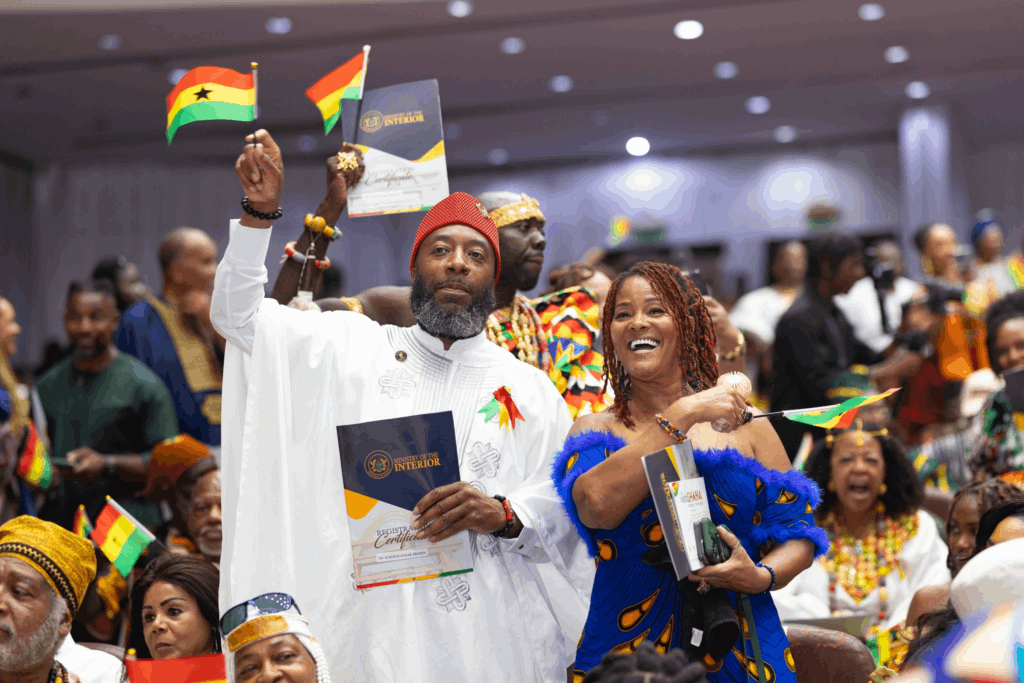
Are you part of the diaspora, dreaming of more than just a visit to Ghana? Ghanaian dual citizenship gives you the full rights and privileges of a Ghanaian citizen, not just a visa stamp. It opens the door to owning property without restrictions, working freely, and traveling in and out of the country without needing a visa every time. It is a way to reconnect with your roots, invest in your future, and truly belong.
The benefits are real, but so are the legal requirements. This guide walks you through what dual citizenship gives you, then explains, straight from Ghana Immigration Service, exactly what naturalization requires, including the fees, the residency test, and the law behind it.
What Ghana Dual Citizenship Gives You
Holding dual citizenship in Ghana means you are treated as a Ghanaian in almost every practical sense, alongside whatever other citizenship you already hold.
- Own property in Ghana without the restrictions that apply to foreigners
- Work in Ghana freely, without needing a separate work permit
- Travel in and out of Ghana without applying for a visa each time
- Take part in Ghanaian life more fully and reconnect with your heritage
- Invest in your future in Ghana with the same standing as any other citizen
The Three Ways to Become a Ghanaian Citizen
If you were not born in Ghana, or the law does not already consider you Ghanaian by birth, there are three legal routes to citizenship.
- Adoption: a child under 16, whose parents are not Ghanaian, can become a Ghanaian citizen if adopted by a Ghanaian parent
- Registration: mainly used by foreigners married to a Ghanaian spouse
- Naturalization: the route used by most people in the diaspora who are not married to a Ghanaian
This guide focuses mainly on naturalization, since that is the path most diaspora members and returnees actually use.
Registration Through Marriage
If you are married to a Ghanaian, registration is usually the simpler route. The main document required is your marriage certificate. Ghana Immigration Service will confirm the marriage is genuine and check when it took place and whether there are children involved.
Other documents typically requested include the Ghanaian spouse’s birth certificate, passport bio data pages, and, if the applicant is employed, a personal tax clearance certificate. You are also required to have lived in Ghana for at least one year before applying.
Naturalization Requirements: What the Law Actually Says
Naturalization is governed by the Citizenship Act 2000 (Act 591) and the Citizenship Regulations 2001 (LI 1690). Section 14 of the Act sets out the residency test that most applicants find the most confusing, so here it is broken down clearly.
The residency test
- You need close to 12 months of continuous residence in Ghana in the year right before you apply. In practice, Ghana Immigration Service usually accepts about 9 months in aggregate, so short trips out of the country do not automatically disqualify you
- You also need at least 5 years in aggregate of residence in Ghana during the 7 years before that 12-month period, which brings the total window considered to about 8 years
- This test exists to show that you genuinely intend to live in Ghana permanently, not just visit occasionally
Good character and sponsors
You need two Ghanaians to sponsor your application and attest to your good character. These sponsors must fall into specific professional categories, such as lawyers, medical doctors, chartered accountants, senior public officers, judges, notaries public, or senior officers in the Ghana Armed Forces or other security institutions.
Police clearance
You will need a police clearance certificate confirming you have not been convicted of any criminal offense recognized under Ghanaian law.
Language requirement
You must be able to speak and understand at least one indigenous Ghanaian language at a basic level. This is the one requirement that the Minister for the Interior cannot waive, even in special circumstances.
Substantial contribution to Ghana
This is considered the most important requirement. You need to show that you have made, or are capable of making, a substantial contribution to Ghana’s progress. The Ghana Immigration Service typically looks at:
- Business investment, including company registration and corporate tax clearance certificates
- Personal tax clearance certificates showing what you have contributed as an individual
- SSNIT clearance certificates showing how many Ghanaians your company employs and whether their social security is being paid
- Contributions in health or education, such as doctors serving underserved communities or academics lecturing and researching in Ghana
- A valid GIPC certificate where relevant, and a valid residence permit at the time of application
Intention to reside permanently and assimilation
Ghana Immigration Service also looks at whether you have assimilated into Ghanaian life, through interviews; company visits where relevant, and your overall length of stay, alongside your intention to make Ghana your permanent home.
Fees and What Happens After You Apply
As of the most recent figures available, registration forms cost 3,000 Ghana cedis and naturalization forms cost 6,000 Ghana cedis. These fees can change, so it is worth confirming the current amount with the Ministry of the Interior before applying.
Once your forms and supporting documents are submitted at the Ministry of the Interior, they are forwarded to the Ghana Immigration Service, which investigates and vets each applicant. The Ghana Immigration Service then compiles a report with its recommendations and forwards it to the Ministry of the Interior. Approved applications are sent to the presidency, since the president holds the final power to approve citizenship by naturalization or registration. Once approved, you are invited to take the oath of allegiance and are issued a certificate of citizenship.
If you are still outside Ghana, someone can act on your behalf to physically submit the application and documentation, since Ghana Immigration Service has not yet fully set up an online application process.
Ready to Start Your Dual Citizenship Journey?
Ghana dual citizenship is more than a legal status. It is a way to own property, work, travel, and belong fully in the country your family calls home. The process has clear requirements, but with the right preparation, it is more straightforward than many people expect.
Don’t go it alone. Visit Diaspora Affairs GH for a full breakdown of the naturalization process or to get connected with the support you need to start your application.