

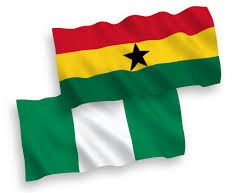
For far too long, the narrative of “Small Ghana” has been deployed as a dismissive shorthand to characterize Ghana’s stature in relation to Nigeria. It is a label rooted in the superficial allure of landmass and population statistics—a metric that, in the grand theater of history and global influence, tells only a fraction of the story.
To those who rely on this reductionist vocabulary, it is time to look at the scoreboard of history, performance, and true national identity.
Interested in learning more about opportunities in Ghana? Contact us to discuss relocation, visas, business setup, and other Ghana-related services.
The Chronology of Sovereignty
If seniority is measured by the path to self-determination, then Ghana stands at the vanguard of African liberation. On March 6, 1957, Ghana became the first nation in sub-Saharan Africa to break the shackles of colonial rule. This was not merely a date on a calendar; it was a beacon that illuminated the road for the rest of the continent, Nigeria included. Ghana did not follow; Ghana paved the way, demonstrating that the struggle for independence was not only possible but inevitable. When Nigeria attained its own independence on October 1, 1960, it did so in a world already changed by the Ghanaian precedent.
The Fallacy of Physical Size
The insistence that size equals strength is a geopolitical illusion. History is littered with examples of nations that exerted global influence far exceeding their geographic boundaries. Consider the United Kingdom: a relatively small island nation that, for centuries, projected power across continents.
Physical dimensions do not dictate a country’s capacity for innovation, its cultural footprint, or its internal stability. Just as Israel serves as a modern example of a nation that commands immense geopolitical significance and technological advancement through strategic excellence—rather than sheer scale—Ghana’s influence is defined by its institutional strength, its resilience, and its role as a stable cornerstone in West Africa.
Performance Over Population
In the arena of competition—specifically the “Jollof Derby” of football—the numbers often defy the “big country” logic. While Nigeria’s larger population naturally provides a wider pool of talent, Ghana’s national teams have historically punched well above their weight in direct confrontations.
- Head-to-Head Dominance: Across decades of competitive matches, including AFCON and various regional cups, Ghana has frequently demonstrated a tactical edge, maintaining a historical record that proves performance is rarely a function of population density.
- The World Cup Lens: While Nigeria has enjoyed notable appearances on the global stage, Ghana’s debut in 2006 marked a trajectory of high-impact participation. When we analyze win percentages and the ability to navigate high-pressure international tournaments, Ghana’s “small” stature has consistently been matched by an outsized ability to compete at the highest level.
Looking to live, work, invest, or study in Ghana? Contact us today to learn how we can help.
The Takeaway
True national might is not measured in square kilometers or millions of citizens; it is measured by the quality of a nation’s institutions, the consistency of its values, and the sharpness of its performance on the global stage.
Dismissing Ghana as “small” is an attempt to mask a deeper anxiety. It is time to retire the outdated belief that Nigeria’s sheer scale makes it “better off.” History shows us that influence is not inherited; it is earned through grit, precedent, and the audacity to lead when others are still following. Size may command attention, but it is excellence that commands respect.
How does this perspective challenge the way you view the regional power dynamics between Ghana and Nigeria?