

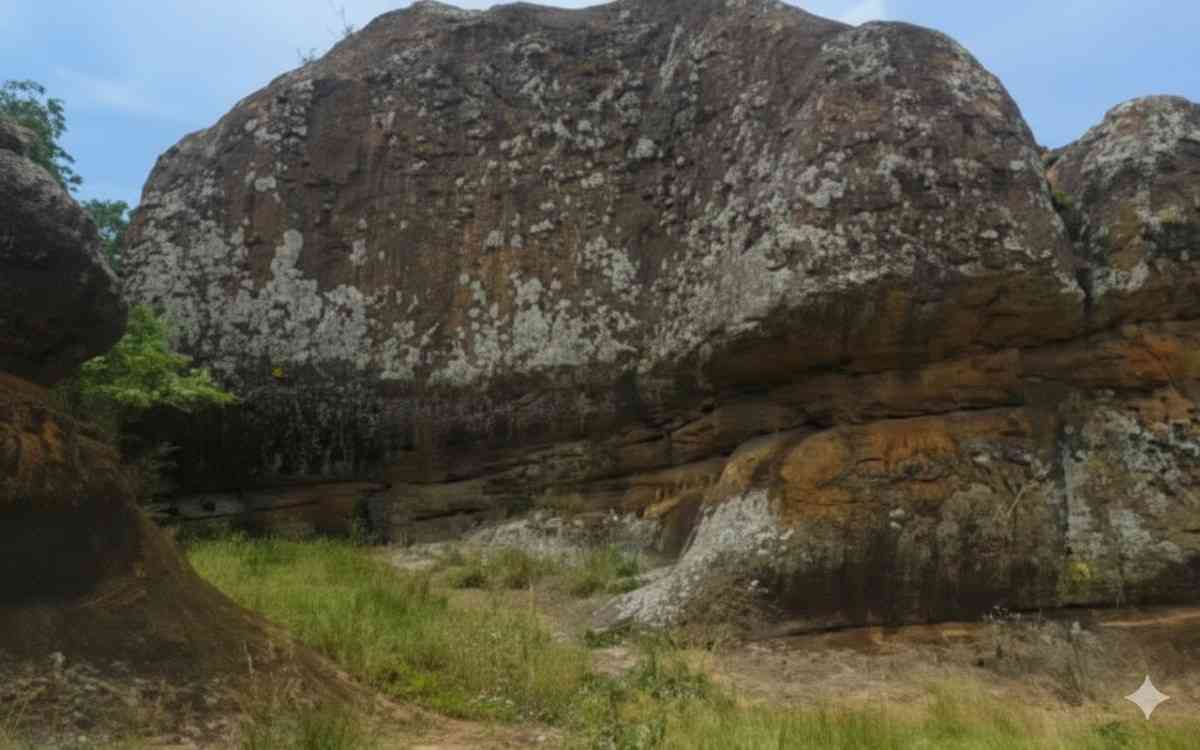
Ghana’s cave sites, including formations in the Volta and Northern regions, represent some of the country’s least commercialized but most spiritually significant heritage destinations, often holding deep ceremonial and historical importance for the communities whose ancestors used them for refuge, ritual, and communication. Ancestral cave tours offered through Diaspora Affairs GH are led by local guides with community ties, ensuring that visits are conducted with cultural respect and contextual depth that mass tourism itineraries rarely provide. For diasporans tracing indigenous African spiritual traditions or seeking connection with pre-colonial Ghanaian history, these tours offer an intimate, grounded counterpart to the more well-known coastal slave castle experiences.
If you are a traveler who craves stories etched in stone, views that make you forget to breathe, and the kind of stillness that only comes when you are truly off the tourist trail, then there is a corner of Ghana that was made for you. Tucked away in the Guan District of the Oti Region, right along the mountainous border with Togo, lies Likpe Todome, a place local have quietly known about for generations but the world is only just beginning to discover.
Known as the Hanging Village because of how its stone houses cling stubbornly to the mountainside, Likpe Todome is not just a scenic stop on a road trip.
For travelers who want a deeper and more curated engagement with Ghana’s cultural heritage, our Heritage Tours offer expertly guided journeys that connect you to the history, traditions, and communities that define this country.
The Mountain: Where the Land Tells Its Own Story
Before you even begin your tour, the mountain itself demands your attention. The Oti Region sits within a stretch of highlands that forms part of the boundary between Ghana and Togo, and the terrain here is dramatically different from the flat coastal lowlands most visitors associate with Ghana. These are ancient mountains, shaped over millions of years, their surfaces textured with exposed rock faces, deep crevices, and stubborn vegetation that has found a way to grow in every available crack.
Throughout the climb, your guide will point out the natural features that made this mountain strategically invaluable for centuries. Natural ridges created perfect vantage points. Dense vegetation provided cover. The rocky terrain slowed down any approaching enemy while the Bakpele, who knew every boulder and path by heart, moved through it with ease. Every feature of the landscape has a story, and the best guides know all of them.
The Origin: A People of the Sharpening Stones
The story of the Bakpele, the people of Likpe, begins centuries ago and stretches back to the ancient Ghana Empire. As that great civilization shifted and migrated, the Bakpele made their way through Atebubu before finally settling in the rugged highlands of what is now the Oti Region. They were not just seeking shelter. They were choosing a home that matched their character, tough, elevated, and unconquerable.
The name Likpe itself is one of the most compelling origin stories in all of Ghanaian history. It comes from two words: lili, meaning sharpening, and kpe, meaning stone. The legend behind it is the kind of story that stays with you long after you have come back down the mountain.
Long ago, an invading army marched toward the Bakpele settlement, confident in their numbers and their weapons. Rather than retreat into the forest or attempt a desperate flight, the Bakpele made a bold decision. They spent the entire night on the mountainside, methodically sharpening every cutlass, every spear, and every blade they possessed against the exposed rock faces of the mountain. The sound, that rhythmic, metallic shirr-shirr echoing through the valley in the darkness, was terrifying. It carried through the night air like the sound of an army ten times its actual size preparing for total war. By dawn, the invaders had turned around and vanished. Not a single drop of blood had been shed. The mountain, the rocks, and the nerve of the Bakpele people had done all the work.
The Tour: Climbing Into the Past
A visit to Likpe Todome is not a passive experience. You do not sit in a bus and look at things through a window. You move. You climb. You sweat a little. And in return, the mountain gives you something genuinely extraordinary.
Starting in the Village
Your tour begins at the base of the mountain, in the village of Todome itself. This is your first glimpse of what makes this place so unusual. Unlike the flat, linear layout of most Ghanaian towns, Todome is terraced into the hillside. The houses here, many of them built from the same stone that forms the mountain, step up the slope one behind the other, each sitting slightly higher than its neighbor. From a distance, it does look as though the village is hanging from the mountain face, suspended in defiance of gravity.
Walking through the village before your ascent is an experience. You will pass women pounding fufu in the shade of stone walls, children playing on paths that wind between houses, and elders seated in doorways who have spent their entire lives with this mountain as their backdrop. The pace here is unhurried, the atmosphere warm, and the welcome genuine. Take your time in the village before you begin your climb.
The Ascent: 45 Minutes Into Another World
The hike to the Ancestral Caves takes approximately 45 to 60 minutes at a comfortable pace, though those who stop frequently to take photographs or absorb the scenery may find it takes closer to 90 minutes. The path is well-worn but not paved, winding upward through a mix of open rocky sections and dense forest canopy.
Your local guide is essential here, not just for navigation but for interpretation. Along the trail, they will point out plants used in traditional medicine, explain the significance of rock formations, and share stories about the history of the mountain and the people who have called it home. These conversations are often the most memorable part of the entire experience.
The path itself changes character as you climb. The trail widens into a comfortable walking path beneath a canopy so thick it creates a natural tunnel of green. Each bend in the trail reveals something new, a sudden opening in the trees with a view across the valley, a cluster of enormous boulders that seem impossibly balanced, or a stretch of trail where the sharpening stones themselves are visible underfoot, smooth and slightly grooved from generations of use.
The Ancestral Caves: A Civilization Underground
After the waterfall, the final stretch of the climb brings you to the entrance of the Ancestral Caves, and nothing quite prepares you for what you find inside. These are not rough, cramped hiding spots. They are a fully conceived, architecturally sophisticated underground settlement, a subterranean city carved and shaped by generations of people who understood exactly how to use the mountain’s natural structure to their advantage.
The caves are cool inside, significantly cooler than the trail that led you here, and the contrast is immediate and welcome. The air has a mineral quality to it, clean and faintly earthy, the smell of stone and deep time. As your eyes adjust to the lower light, the scale of the space becomes clear. These chambers are large. Some are tall enough to stand fully upright in, with smooth walls and natural formations that create the impression of deliberate architecture.
There are six main chambers within the cave system, each with its own distinct purpose in the life of the community that sheltered here:
- The Chief’s Palace: The largest and most impressive chamber, this is where the leadership of the Bakpele resided during times of conflict. The space is cool and surprisingly comfortable, with natural stone ledges that served as seating and sleeping surfaces. Standing here, you can feel the authority the space was designed to project.
- The Conference Hall: A broad, open chamber where the elders of the community gathered to discuss strategy, resolve disputes, and make collective decisions. The acoustics in this space are remarkable; voices carry clearly without echoing, as though the mountain itself was designed for deliberation.
- The Food Storage Chamber: A cooler, deeper section of the cave system used to preserve food during extended periods when the community was sheltering underground. The consistent low temperature here would have kept provisions safe for weeks at a time.
- The Prison: A narrow, dark crevice at the back of the system, barely wide enough for a person to stand in. It is sobering in its simplicity. The Bakpele maintained order even in crisis, and those who broke the community’s laws faced justice even in the depths of the mountain.
- The Women’s Chamber: A separate, more private section of the caves designated for women and children, offering protection and a degree of separation from the more public areas of the underground settlement.
- The Lookout Point: Accessible via a natural opening in the cave system that leads to an exposed ledge on the upper face of the mountain. From here, scouts could observe the valleys below in every direction, watching for approaching enemies with a clear line of sight across miles of terrain. Standing at the lookout today, the view is extraordinary, a sweeping panorama of forest, farmland, and distant hills that stretches all the way to the Togo border.
Spending time in the caves is an experience that operates on multiple levels simultaneously. On the surface, it is fascinating history, an insight into the ingenuity and resourcefulness of a people who turned the natural world into their greatest weapon. But there is also something more intangible at work. The caves have a stillness that is almost sacred. You are standing in the exact space where people sheltered, planned, prayed, and waited out storms of every kind. That kind of presence lingers.
Why Likpe Todome Belongs on Every Ghana Itinerary
Ghana has no shortage of remarkable destinations. The slave castles of Cape Coast, the canopy walkways of Kakum, the drumming and dance of Kumasi, the wildlife of Mole National Park. Each of these is extraordinary in its own way. But Likpe Todome offers something that most of Ghana’s more famous attractions cannot: the feeling that you have found something the rest of the world has not yet caught up with.
There are no souvenir stalls lining the path. There is no queue at the entrance. There is no polished visitor center. What there is, is a mountain, a set of caves, a small waterfall, and a community of people who carry their history with genuine pride and are willing to share it with those curious enough to make the climb. That is a rare thing, and it will not stay rare forever.
The nearby Wli Agumatsa Waterfalls are only a 20-minute drive from Todome, making it easy to combine both in a single day trip. The two experiences complement each other beautifully: the dramatic and well-known on one hand, the intimate and undiscovered on the other.