

The Volta and Oti regions of Ghana are among West Africa’s most layered landscapes. Here, ancient Ewe migration routes wind past colonial-era fortresses, community-led sanctuaries, and mountains named after a people’s first encounters with the land. For members of the diaspora tracing roots, or for heritage travellers seeking depth beyond the surface, this corner of Ghana offers an extraordinary convergence of nature, memory, and living culture.
Ancestral Caves and Refuge Sites
Likpe Todome Ancestral Caves
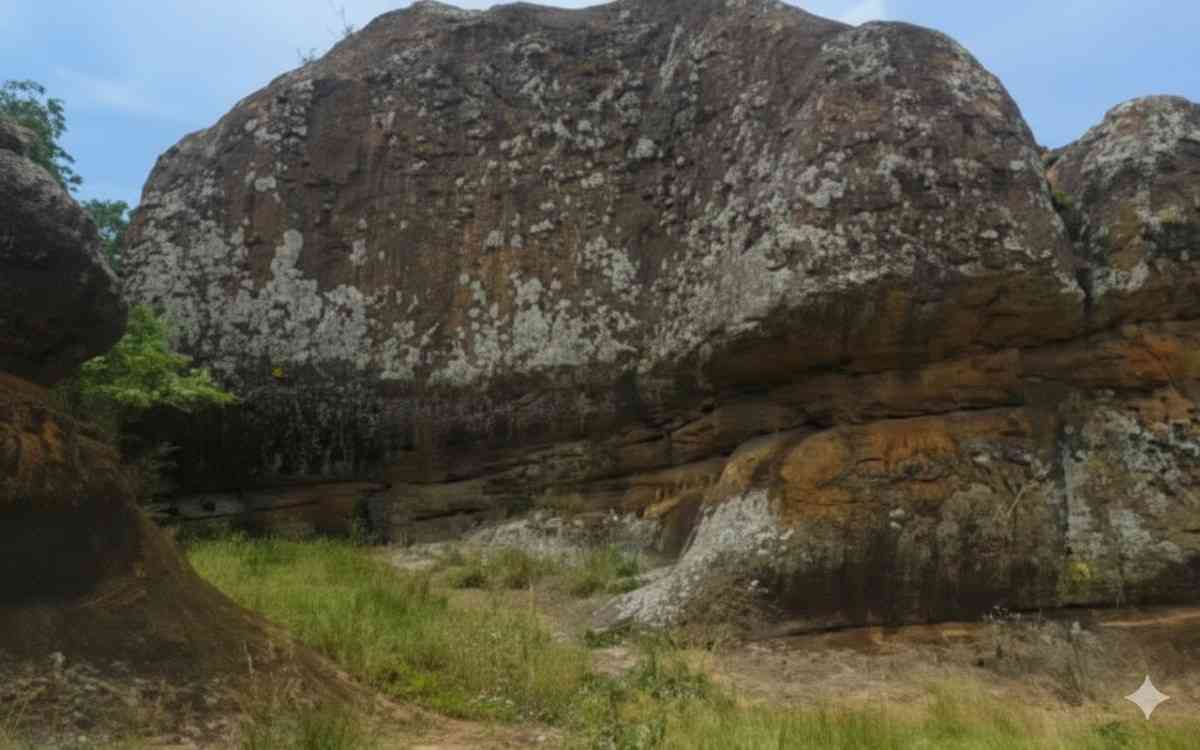
Situated beneath Likpe Mountain in the Guan District, the Likpe Todome Ancestral Caves are among the most literally ancestral sites in the Volta Region. The Likpe people, originally from Atebubu, retreated into these hills after a conflict with neighbouring settlers, living in the caves for years before founding the settlement of Todome, which translates as “sharpening stones from under the mountain.” The name “Likpe” itself derives from the Ewe word for the act of sharpening stones, witnessed by opposing scouts and carried forward as the people’s identity.
The six chambers were not merely a shelter. Each served a distinct function: conference hall, watchtower, sleeping quarters, chief’s palace, detention cell, and escape route. An entire system of governance was maintained within the rock. Located 8 kilometres north of Wli Falls, the caves have been open to guided community tours since the 1980s and require a 45-to-60-minute climb to reach. For diaspora travellers, walking through them is as close as one can get to standing inside a decision that kept a people alive.
Mountains and Ancestral Settlements
Mount Afadja
Mount Afadja is the highest mountain in Ghana and one of the most symbolically significant sites in Ewe heritage. Its name is a softened form of the Ewe phrase “Avadze-to.” Legend holds that migrating Ewe communities named the mountain after encountering “avadze” plants, a species that caused painful skin irritation, during their long march across the landscape. The name is a memory folded into geography, a reminder that these hills were walked by ancestors before they were mapped by outsiders.
Amedzofe Village
Perched at 750 meters above sea level, Amedzofe is the highest habitable settlement in Ghana. During the 19th-century Anglo-Ashanti Wars, its elevation made it a strategic refuge and defensive stronghold for the Ewe people. Two structures stand as markers of the colonial encounter that followed: a church built by German missionaries in 1889, and an iron cross erected in 1939 atop nearby Mount Gemi. The tension between those two histories, resistance and conversion, gives Amedzofe a layered significance that rewards slow, thoughtful exploration.
Kpetoe Kente Weaving Village
Kpetoe is a living heritage site where Ewe Kente, originally called “Kete,” has been woven for generations. The craft here differs meaningfully from the more widely known Ashanti kente: Ewe weavers from Kpetoe often incorporate figurative designs into their cloth, embedding narratives and symbols that tell specific stories. Visiting the weavers directly, watching a strip take shape beneath skilled hands, is one of the most intimate ways to connect with living Volta Region culture.
Waterfalls and Wildlife
Wli Agumatsa Waterfalls
At 80 meters, Wli Agumatsa is the tallest waterfall in West Africa and the anchor of any serious heritage itinerary in the Volta Region. Located in the Hohoe municipality, it is known as “Agumatsa,” which translates to “Allow Me to Flow,” a phrase that carries a quiet, ancestral weight. According to oral tradition, hunters who first stumbled upon the site mistook the roar of the falls for a talking drum, believing they were hearing a message from the forest.
Today, Wli sits within the Agumatsa Wildlife Sanctuary, which protects over 200 bird species and one of the largest colonies of fruit bats on the continent. The convergence of natural wonder and oral history makes it a compelling first stop on any ancestral heritage tour.
Tagbo Falls
Situated near the village of Liati Wote, Tagbo Falls draws its water from the Tagbo River, which descends from the slopes of Mount Afadjato. The site holds deep spiritual significance for the Ewe people, who believe the falls possess mystical powers rooted in the ancestral world. A visit here is as much a spiritual experience as a natural one, and local guides often share stories that are passed down rather than written down.
Kyabobo National Park
Established in 1993 in the Oti Region, Kyabobo National Park shares a border with Togo’s Fazao-Malfacassa National Park, making it a cross-border ecological and cultural zone. Its name comes from the Achode word meaning “to go around,” a reference to the patience and care required to navigate its steep, uneven terrain. Within its boundaries rises Mount Dzebobo, Ghana’s second-highest peak, a rewarding destination for those willing to take the longer path.
Historical Landmarks and Infrastructure
Lake Volta
Lake Volta was formed in 1965 following the completion of the Akosombo Dam and holds the distinction of being the world’s largest man-made lake by surface area. Its creation, however, came at a profound human and ecological cost: approximately 80,000 people were displaced from 740 villages, and a vast forest was submerged, giving way to a unique underwater ecosystem that continues to evolve. For the diaspora, the lake is a site of contradictions: a symbol of post-independence nation-building and a place of irreversible loss. Travelling its waters, particularly through communities that were resettled, adds historical dimension to what might otherwise be seen as scenery.
Fort Prinzenstein, Keta
Built by the Danes in 1784 on the coast at Keta, Fort Prinzenstein is a UNESCO World Heritage site and one of Ghana’s most sobering landmarks. It was constructed primarily to facilitate the transatlantic slave trade and later repurposed as a prison. By 1980, severe sea erosion had heavily damaged its structure, a detail that feels both literal and symbolic: the Atlantic that swallowed so many people is slowly reclaiming the fort that made it possible. A visit to Keta is essential for any heritage tour that takes the full story seriously.
St Paul Lighthouse, Woe
Located in Woe, near Keta, the St Paul Lighthouse is one of the oldest in Ghana, built to warn ships away from a notoriously dangerous stretch of coastline. Its age and placement along a historically significant shipping route make it a quiet but meaningful stop for those interested in how this part of West Africa was navigated and controlled during the colonial era.
Tafi Atome Monkey Sanctuary
Founded in 1993, the Tafi Atome Monkey Sanctuary is a community-led ecotourism project that reflects a model of conservation rooted in cultural belief rather than external mandate. For more than 200 years, the local people have regarded Mona monkeys as sacred messengers from the gods. That belief became the foundation of a protection system long before the formal sanctuary existed. Today, visitors can walk among the monkeys freely, a rare and moving experience that demonstrates what happens when conservation aligns with indigenous worldview.
Zimmaziwo Snake Village, Hohoe
Less well known than its neighbouring attractions, Zimmaziwo, near Liati Wote, carries a tradition of snake conservation rooted in local taboos. Villagers live in proximity to various snake species, which are considered harmless and protected by community custom. It is a small but genuine example of how cultural belief can sustain ecological balance across generations.
Planning Your Ancestral Heritage Tour
The Volta and Oti regions reward those who travel slowly and listen carefully. Many of the most significant sites here are not primarily tourist destinations; they are living communities with oral traditions, active spiritual practices, and histories that extend well before the colonial record.
When planning your itinerary, consider pairing natural sites with their human context. Wli Falls becomes richer when paired with a conversation about the Ewe oral tradition that surrounds it. Fort Prinzenstein becomes more than a ruin when you understand the coastal communities that survived and continue to live alongside it.
Diaspora Affairs Ghana offers guided ancestral heritage tours across regions, designed to connect travellers with the people, places, and histories that shaped the Ghanaian diaspora experience. Reach out to our team to begin building your itinerary.